
Search Results for
tag/operation_pass_along
Blog Post
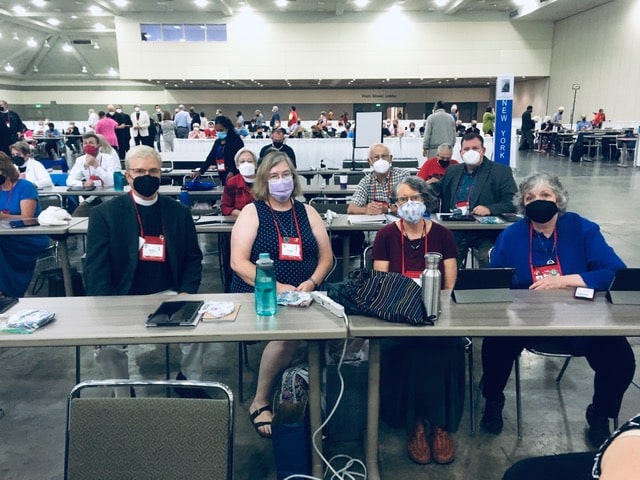
GC Deputy Liz Hall’s Daily Updates
July 11 Greetings from Baltimore! We finished our business by lunchtime today. The last few items of business are usually courtesy resolutions. These are resolutions that essentially say thank you to various people for contributions...
Resource
Sample Church Group Expectations and Confidentiality Policy
Church Group Expectations We are welcoming, inclusive, open, and non-judgmental We arrive on time We stay focused on the purpose of the group We are welcome to share or not as is comfortable for us...
Resource
Foster Care Advocacy
The 206th Diocesan Convention on Oct 25, 2025, passed Resolution 1: Foster Care Advocacy in Maine, which encourages the diocese to include prayer for children in foster care this liturgical year, either as a petition...
Resource
Diocese of Maine’s Constitution and Canons Regarding Lay Delegates to Convention
DIOCESE OF MAINE CONSTITUTION, ARTICLE III Section 4. Each Parish in union with the Convention, or the Vestry thereof, and each Organized Mission in union with the Convention, or the Bishop’s Committee thereof, may, at...
Page
Adults
Blog Post
Bridging the Gap in Augusta – November 2024 Report
Bridging the Gap is a community initiative of Emmanuel Lutheran Episcopal Church and a partner program of the United Way of Kennebec Valley. We have not created something new but are working to unify three existing direct services at the administrative and operational levels. As with any social justice initiative, Bridging the Gap is a way for us to have an organized response to that which breaks our hearts in our community; a way to offset the parts of the system that often make it difficult for an individual to become the healthiest version of him or herself; and a way to develop long-term solutions. The mission of Bridging the Gap is to help people become the healthiest version of themselves by connecting them to basic needs and community resources and by providing opportunities for meaningful volunteerism and social connection. The vision of Bridging the Gap is a community in which everyone is given the opportunity to thrive and live with dignity.
Page
Employment
Resource
Bishop Brown’s Address to the 205th Convention of the Episcopal Diocese of Maine
Download a PDF Celebrated Maine author Elizabeth Strout, born in Portland and now living in Harpswell, is arguably best-known for introducing the world to her character, Olive Kitteridge, in 2008. Strout’s eight books aren’t exclusively set in...
Resource
Walking Together
Faithfully Supporting Our Vulnerable Neighbors – 2026 On the death of Joan Sebastián Guererro Mainers are united in shock, outrage, and grief at another act of violence involving ICE agents—this time in our own backyard...
Resource
Expressing the Mind of the House on Climate and Our Vocation in Christ GC80
Climate change and environmental degradation are manifestations of our turning away from God. The effects of this willful separation from God resonate across our collective lives: All areas of justice are either worsened or made better depending on the health of the planet. A changing climate and degraded environment worsen conflict, forces human migration, and causes food insecurity. These related crises increase the rate of violence, cause more natural disasters and humanitarian crises, and deepen the wounds of those already suffering from racism. People living in poverty are plunged further into poverty by the deteriorating condition of the planet.